An office furniture removal service helps businesses clear desks, chairs, cubicles, tables, shelving, and other workplace furniture. The crew may sort, take apart, carry, load, and route each item for reuse, recycling, or disposal. The exact work depends on the furniture, building access, safety needs, and cleanout plan.
For a small office move or a full workplace closure, old furniture can slow down the next step. Desks may block walkways, cubicle panels may fill storage rooms, and large tables can be hard to move through doors. A planned service helps business owners and property managers clear these items in an orderly way.
Table of Contents
- What Does an Office Furniture Removal Service Include?
- Can Desks, Cubicles, and Conference Tables Be Removed?
- How Are Office Furniture Removal Jobs Prepared?
- Does Office Furniture Removal Include Disassembly and Heavy Lifting?
- What Happens to Office Furniture After Pickup?
- How Can a Business Plan an Office Furniture Removal Job?
- When Should a Business Schedule Office Furniture Removal?
- Frequently Asked Questions
What Does an Office Furniture Removal Service Include?
An office furniture removal service often includes sorting, carrying, loading, and removing unwanted workplace furniture. Many services also handle basic disassembly and separate items that may be reused or recycled. The business should explain what needs to go before the crew arrives.
Office furniture removal can cover desks, chairs, filing cabinets, bookcases, cubicles, reception counters, tables, shelves, and storage units. Some crews also remove break-room furniture, mattresses from staff housing, and bulky items from basements or storage areas. The service area may include offices, stores, warehouses, and commercial buildings in Hemet, from Downtown Hemet and Valle Vista to San Jacinto, Homeland, Winchester, Idyllwild, and nearby communities.
Which types of workplace furniture can be removed?
Most common office furnishings can be removed when they are safe to handle. These may include:
- Desks, standing desks, and computer workstations
- Cubicle walls, panels, and attached work surfaces
- Conference tables, meeting tables, and reception desks
- Filing cabinets, bookcases, shelving, and storage units
- Office chairs, waiting-room seats, and break-room tables
The crew may ask about the furniture’s size, weight, condition, and location. Items attached to walls, floors, or electrical systems may need more planning. Built-in cabinets and fixtures may require a contractor instead of a standard junk removal crew.
How does the removal process work from start to finish?
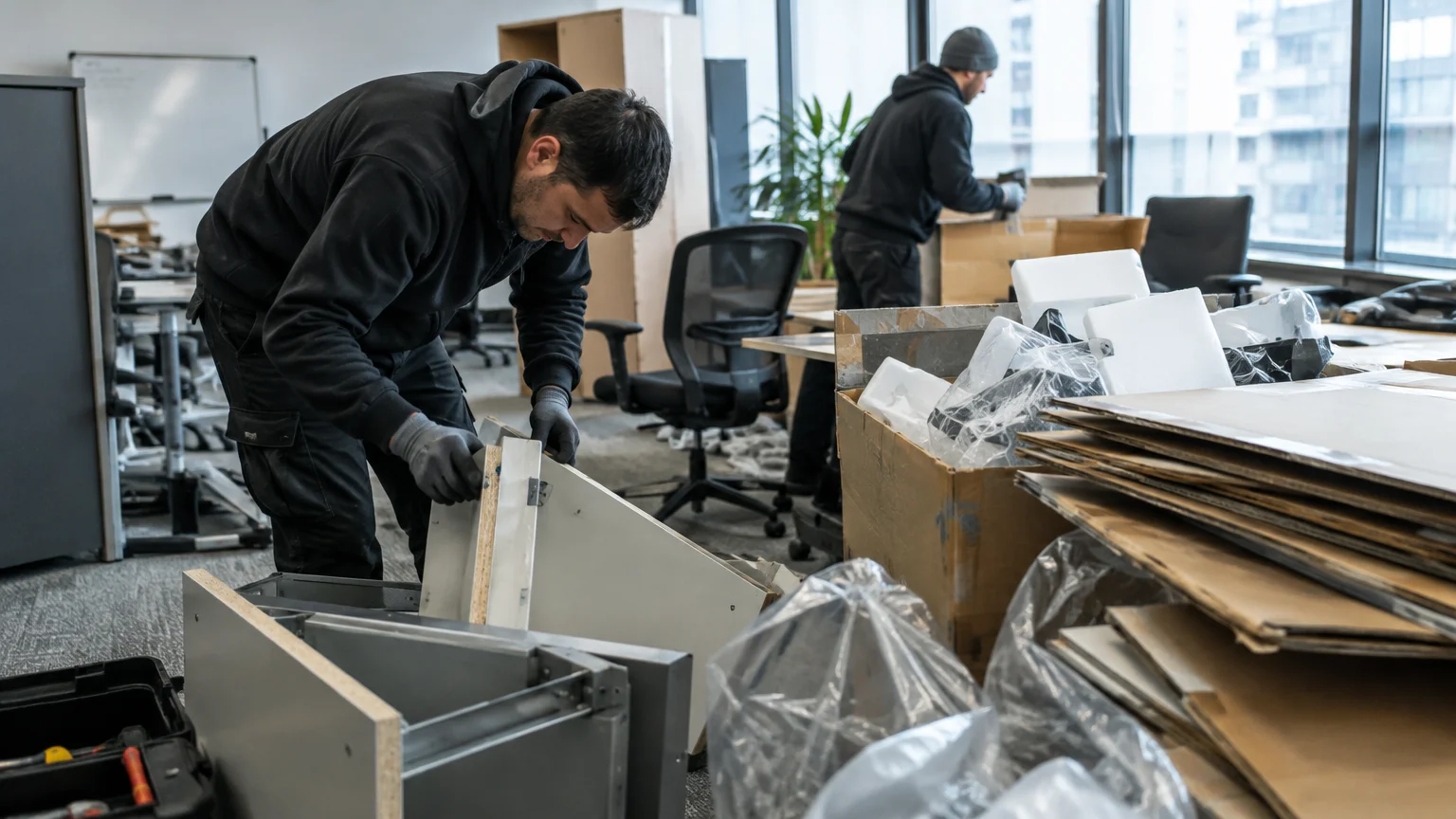
The process often starts with a review of the items and the building. The crew checks entrances, halls, elevators, stairs, loading areas, and parking rules. Next, workers protect nearby surfaces, take apart suitable items, move the pieces, and load them for the next step.
A business can work with Hemet CA Junk Removal to plan an office cleanout. Clear details help the crew bring the right tools and choose a safe route. The goal is to remove unwanted furniture without creating extra work for staff or building managers.
Can Desks, Cubicles, and Conference Tables Be Removed?
Yes, desks, cubicles, conference tables, and reception furniture can often be removed as part of a commercial furniture pickup. The crew first checks how each item is built and how it can leave the building. Large pieces may need to be separated before they can pass through doors or elevators.
Office furniture can look simple but still cause moving problems. A desk may have a heavy metal frame. A cubicle may connect to several panels. A conference table may be too wide to turn in a hall. Careful planning lowers the risk of damage to walls, floors, doors, and the furniture itself.
How are desks and workstations handled?
Desks and workstations are usually cleared of office supplies before removal. Drawers should be emptied, and computers should be removed by the business’s staff or information technology team. The crew can then check the frame, legs, shelves, and attached parts.
Some desks can move as one piece. Others must be taken apart. Workers may remove legs, keyboard trays, shelves, and modesty panels when those parts block safe movement. A business should keep screws and small parts with the item only when the furniture will be saved for later use.
What happens to large conference tables and reception furniture?
Large tables and reception counters need a wider route and more planning. The crew may measure doorways, check elevator size, and review building rules before moving them. In some cases, the top, legs, panels, or storage sections must be separated.
Reception furniture can include glass, stone, metal, or built-in wiring. These materials need careful handling. Items joined to walls or floors should not be pulled loose without approval from the property owner or a qualified contractor. Hemet CA Junk Removal can help businesses decide which items are ready for removal and which need another type of service.
How Are Office Furniture Removal Jobs Prepared?
A business should decide what stays, what goes, and who can approve the removal. Staff should remove personal items, documents, electronics, and anything with private information. A clear plan makes it easier for the crew to work without stopping to ask about each item.
A cleanout service helps remove unwanted items from a set space, such as an office, storage room, or whole building. It may include furniture, boxes, fixtures, and general junk. A business may use one for a move, remodel, closure, lease handoff, or workspace change.
What should a business do before the removal crew arrives?
The business should mark items for removal with clear signs or labels. It should also empty drawers, cabinets, and shelves. Important records should go through the company’s approved shredding process, not into a general furniture load.
Useful preparation steps include:
- Create a simple list of furniture that needs to go.
- Remove computers, monitors, phones, and other electronics.
- Clear drawers, shelves, cabinets, and desk surfaces.
- Tell the building manager about the planned pickup.
- Reserve loading space or elevator access when required.
- Keep employees and visitors away from the moving path.
Businesses should also check whether any furniture belongs to a landlord, leasing company, or another tenant. Removing the wrong item can cause delays and disputes.
Which access and safety details affect the job?
Access details can affect how fast and safely furniture moves. Narrow halls, stairs, locked doors, low ceilings, parking limits, and busy public areas all matter. The crew may need another route or a set loading window.
The business should mention glass, sharp edges, unstable shelves, water damage, mold concerns, and damaged floors. Staff should not try to move heavy furniture through crowded areas. Simple tasks, such as clearing small items, are usually safe for employees. Heavy lifting and awkward carries are better left to trained workers.
Does Office Furniture Removal Include Disassembly and Heavy Lifting?
Many office furniture removal services include basic disassembly and heavy lifting, but the exact scope depends on the item and site. Workers may take apart desks, cubicles, shelves, and tables when that makes removal safer. Furniture with built-in wiring, plumbing, or permanent fixtures may need another professional.
Disassembly means taking an item into smaller pieces so it can be moved or handled. It is not the same as taking apart a building fixture. A crew may remove bolts, legs, panels, and shelves, but it should not cut live wires or disconnect complex systems without proper skills.
When does furniture need to be disassembled?
Furniture often needs disassembly when it cannot pass through a doorway, fit in an elevator, or turn safely in a hall. A large desk may need its legs removed. A cubicle may need its panels separated. A conference table may need its top divided from the base.
The crew may use hand tools for common fasteners. If bolts are rusty or parts are damaged, workers may need more time and care. Businesses should not force a stuck item apart because this can damage the building or create sharp edges.
How are bulky or difficult-to-move items handled?
Bulky furniture is handled by planning the route, protecting surfaces, and using enough workers. The crew may use moving straps, dollies, ramps, or other tools suited to the item. Heavy cabinets should stay closed, and drawers should be secured so they do not slide out.
Employees can help by keeping the route open and showing the crew the right items. They should not lift large furniture without training. When a piece is unsafe, unstable, contaminated, or attached to a building system, the business should explain the issue before scheduling removal.
What Happens to Office Furniture After Pickup?
After pickup, office furniture may be sorted for reuse, donation, recycling, or disposal. The path depends on the item’s condition, material, local rules, and available facilities. Good furniture may have another use, while damaged pieces may need material recovery or disposal.
A removal crew cannot promise that every item will be donated. Furniture may have water damage, broken frames, missing parts, stains, or unsafe materials. Some facilities also reject items that are too large or hard to process. The business should ask how the service handles usable and unusable pieces.
Which items may be donated, reused, or recycled?
Clean desks, chairs, shelves, and tables may be suitable for reuse when they are safe and complete. A local nonprofit, resale outlet, reuse center, or community group may accept them. The receiving group decides whether it can use the items.
Metal filing cabinets and some desk frames may go to a metal recycling facility. Cardboard packaging and certain plastics may also be sorted apart. Office furniture with mixed materials can be harder to recycle because wood, metal, foam, glass, and glue are joined together.
How are damaged or unusable furnishings disposed of?
Broken or badly damaged furniture may go to a disposal facility that accepts bulky items. The crew should separate items that need special handling from normal furnishings. Paint, chemicals, batteries, fluorescent lamps, and other hazardous materials should not go into a regular furniture load.
Businesses may also need special help with appliances. A cleanout crew can explain whether it handles refrigerators or microwaves, but local rules may apply. The same is true for mattresses, electronics, and construction debris. Clear sorting helps prevent rejected loads and unsafe handling.
How Can a Business Plan an Office Furniture Removal Job?
A business can plan an office furniture removal job around a move, remodel, lease, or closure date. The first step is to list the furniture and identify anything needing special care. The next step is to confirm access, building rules, and the preferred removal window.
This planning also helps compare one furniture pickup with a larger cleanout. A business may have furniture in offices, basements, attics, or storage rooms. Asking whether one crew can handle the full job may reduce repeated disruption.
What should a business include in its removal plan?
The plan should name the rooms, furniture types, access points, and items that must stay. It should also note stairs, elevators, loading zones, security desks, and time limits. Photos can help explain large or unusual pieces before the appointment.
A strong plan includes:
- A room-by-room list of furniture for removal
- A clear mark for items that must remain
- Notes about stairs, elevators, parking, and loading access
- Details about glass, wiring, fixtures, or damaged items
- A contact person who can make decisions on site
The business should also confirm what happens to documents, electronics, appliances, and hazardous materials. These items often follow different rules than desks or tables.
How can businesses compare removal options?
Businesses should compare the service scope instead of choosing by a short label. A full-service junk removal company may offer sorting, lifting, loading, and removal in one visit. Another provider may only drop off a container or accept items at a facility.
Useful questions include whether the crew handles cubicles, whether basic disassembly is included, and whether workers remove furniture from inside the building. The business should also ask how donations and recycling are handled. These details show whether the service fits the actual cleanout.
When Should a Business Schedule Office Furniture Removal?
A business should schedule office furniture removal before a move, remodel, closure, lease handoff, or major workspace change. Early planning gives the company time to sort records, remove electronics, reserve elevators, and tell employees what to expect. Urgent help may be needed when furniture blocks access or delays a property turnover.
Common reasons include:
- Moving into a smaller or larger office
- Replacing old desks, chairs, or cubicles
- Closing a location or ending a lease
- Clearing space before construction or painting
- Preparing a vacant property for a new tenant
- Removing furniture after a storm, leak, or other damage
Which business changes commonly require furniture removal?
Downsizing often leaves extra desks, chairs, and storage units behind. A remodel may require furniture to leave before workers repair floors or walls. A business closure may involve a full office cleanout, including reception areas, meeting rooms, storage spaces, and break rooms.
Property owners may also need removal after a tenant leaves items behind. In that case, the owner should follow the lease and local legal process before disposing of property. A removal company can handle the physical work after the owner has permission to proceed.
How can a business choose the right removal service?
The right service should match the furniture, building, schedule, and disposal needs. A business should look for clear answers about heavy lifting, disassembly, access, recycling, and items that are not accepted. It should also share accurate details instead of assuming every item fits standard removal.
Hemet CA Junk Removal serves businesses and property owners in and near Hemet. A clear talk before the appointment can help the business prepare the space and avoid confusion on removal day.
Frequently Asked Questions
Can an office furniture removal service remove cubicles?
Yes, many office furniture removal services can remove cubicle panels, work surfaces, brackets, and related parts. Cubicles may need basic disassembly before they can pass through doors or elevators. The business should mention the number of workstations, their layout, and any attached wiring before scheduling the job.
Can old office furniture be donated?
Some clean and usable office furniture may be donated or reused. Acceptance depends on the item’s condition, size, material, and the receiving group’s needs. Broken, stained, unsafe, or incomplete furniture may not qualify. The removal crew can explain possible sorting options, but no donation outcome is guaranteed.
Does furniture removal include moving items from inside the office?
Many full-service removal crews carry furniture from inside the building, but the exact work varies. The business should ask about stairs, elevators, long halls, loading areas, and furniture needing disassembly. Clear site details help the crew plan a safe path and bring suitable moving tools.
What should happen to computers and office electronics?
Computers, monitors, phones, printers, and other electronics should be separated from regular furniture. The business’s information technology team should remove data and follow its approved electronics process. Some junk removal services accept electronics, while others direct them to a special recycler. The business should confirm this before pickup.
Can one service remove office furniture and other junk?
A full-service junk removal company may handle office furniture along with boxes, shelving, mattresses, appliances, or other cleanout items. Acceptance rules vary by provider and local facility. Businesses should make a complete list before booking so the crew can confirm whether one visit fits the planned removal.
Key Takeaways
- Office furniture removal can include sorting, lifting, loading, and basic disassembly.
- Desks, cubicles, tables, chairs, shelving, and reception furniture are common items.
- Businesses should remove documents, electronics, and personal items before pickup.
- Access, stairs, elevators, loading zones, and building rules affect the removal plan.
- Usable furniture may be reused or donated, while damaged items may be recycled or disposed of.
Conclusion
An office furniture removal service can help businesses clear desks, cubicles, conference tables, storage units, and other bulky items. Good results start with a clear list, safe access, and a plan for electronics, documents, and special materials. Early scheduling also helps protect the workday and prepare the space for its next use.
Contact us today to plan office furniture removal with Hemet CA Junk Removal.